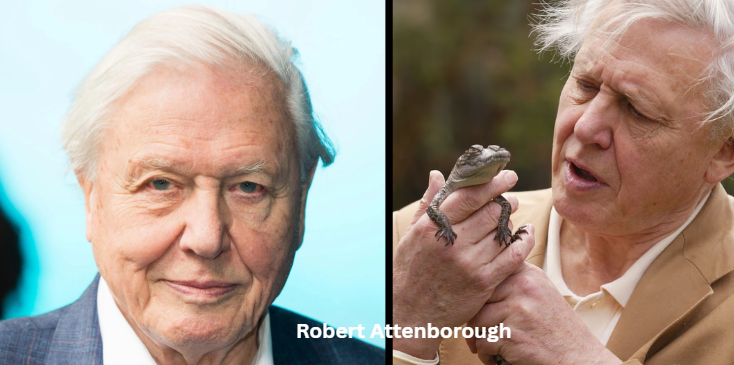
The name Robert Attenborough is instantly connected with science, documentaries, and discovery. When people hear it, they often think of Sir David Attenborough, the legendary British broadcaster and natural historian whose work has inspired millions around the world. However, another member of the family, Robert Attenborough, has followed a completely different but equally interesting path. Instead of television and public recognition, Robert built his career in the world of academia, research, and biological anthropology.
Robert Attenborough is known as a British biological anthropologist and academic researcher whose work focuses on human population biology, health, evolution, and communities in regions such as Papua New Guinea. Unlike his famous father, Robert has preferred a private life away from cameras and media attention. His professional reputation comes from research, teaching, and academic contributions rather than celebrity status.
His story is a fascinating example of how individuals from famous families can create their own identities. While the Attenborough surname carries global recognition, Robert’s achievements come from years of scientific study and dedication to understanding human biology and adaptation.
Quick Bio
| Category | Details |
|---|---|
| Full Name | Robert Attenborough |
| Profession | Biological Anthropologist and Academic Researcher |
| Nationality | British |
| Known For | Human population biology and anthropology research |
| Father | Sir David Attenborough |
| Mother | Jane Elizabeth Ebsworth Oriel |
| Research Areas | Human health, evolution, demography, biological anthropology |
| Main Research Region | Papua New Guinea and Pacific communities |
| Academic Connection | Australian National University and University of Cambridge |
| Public Profile | Primarily academic rather than media-focused |
Who Is Robert Attenborough?
Robert Attenborough is a scholar who has built his professional life around understanding human populations and their relationship with biology, environment, and culture. His field, biological anthropology, combines elements of biology, history, health sciences, and social research to explore how humans develop and adapt in different environments.
Although many people first discover Robert because he is the son of Sir David Attenborough, his career stands independently. He did not choose a path in broadcasting or entertainment. Instead, he became interested in scientific research, focusing on questions about human variation, health patterns, and population development.
Robert’s work reflects a quieter form of scientific contribution. While documentary makers bring knowledge to millions through television, academic researchers often contribute through studies, publications, and teaching. Robert represents this less visible but highly valuable side of science.
His career shows that influence does not always come from public attention. Through research and education, he has contributed to a better understanding of human communities and evolutionary processes.
Early Life and Family Background
Robert Attenborough was born into one of Britain’s most well-known families. His father, Sir David Attenborough, became internationally famous for his nature documentaries and environmental communication. His mother, Jane Elizabeth Ebsworth Oriel, played an important role in maintaining family life while David’s career expanded globally.
Growing up in the Attenborough family meant being surrounded by curiosity, learning, and creativity. The family environment encouraged intellectual exploration, which likely influenced Robert’s later interest in science and research. However, instead of following his father’s public career, Robert developed his own academic direction.
Robert also has a sister, Susan Attenborough, who has maintained a private life away from public attention. Unlike many children of famous personalities, Robert and his sister have generally avoided media exposure and focused on their own professional paths.
Being connected to such a famous family could have easily defined Robert’s public identity, but he created a separate reputation through his own work. His career demonstrates that family background can provide opportunities, but personal dedication creates individual achievement.
Robert Attenborough’s Academic Career
Robert Attenborough’s professional journey has mainly been connected with universities and research institutions. His academic interests include human population biology, health, evolutionary anthropology, and human adaptation. He has been associated with the Australian National University (ANU), where he contributed as an academic and researcher.
A major focus of his research has been communities in Papua New Guinea. This region has been important for anthropological research because of its cultural diversity, unique population histories, and relationship between traditional lifestyles and changing environments.
Through his studies, Robert explored how biological and environmental factors influence human populations. Research in this area helps scientists understand topics such as nutrition, disease patterns, adaptation, and population development.
His academic career represents decades of commitment to understanding humanity from a scientific perspective. Rather than seeking public recognition, he focused on producing meaningful research and supporting future generations of students.
Research Interests and Contributions
One of the most important aspects of Robert Attenborough’s career is his focus on human population studies. Biological anthropology examines how humans differ, adapt, and respond to environmental challenges over time. Robert’s research contributes to this broader understanding of human biology and evolution.
His work in Papua New Guinea has been particularly significant because the region offers valuable insights into human diversity and adaptation. Researchers studying these communities can learn more about relationships between genetics, environment, lifestyle, and health.
Robert’s research approach highlights the importance of combining scientific knowledge with cultural understanding. Studying human populations requires respect for local communities and careful consideration of social and environmental factors.
Although his work may not be widely recognized outside academic circles, it represents an important contribution to science. Many discoveries that improve our understanding of humanity come from researchers working quietly behind the scenes.
Robert Attenborough and the Difference From David Attenborough
The comparison between Robert Attenborough and his father is natural because of their shared surname. However, their careers are built on very different forms of scientific communication. David Attenborough became famous for bringing nature and wildlife knowledge to global audiences through documentaries.
Robert, on the other hand, chose a research-based career focused on human biology and anthropology. While David studies and communicates the natural world through storytelling, Robert studies human populations through academic investigation.
Both careers share a common foundation: curiosity about life and the world around us. Their approaches are different, but both demonstrate the importance of scientific understanding.
The contrast between them also shows that there are many ways to contribute to knowledge. Some scientists educate millions through media, while others contribute through research institutions and universities.
Robert Attenborough’s Private Lifestyle
Unlike many individuals connected to famous families, Robert Attenborough has maintained a very private personal life. He has not pursued fame, public appearances, or media attention. Most information available about him focuses on his academic achievements rather than personal matters.
This privacy appears to be a deliberate choice. Instead of using his family name for public recognition, Robert has allowed his professional work to define him.
His private approach is one reason why people often search for information about him. Many are curious about the person behind the famous surname, but Robert’s life has always been centered around research and education.
In an age where many public figures share every detail of their lives, Robert’s quiet approach is unusual. It reflects a traditional academic mindset where knowledge and contribution matter more than popularity.
Robert Attenborough’s Legacy
Robert Attenborough’s legacy is connected to science, education, and research. While he may not have the worldwide recognition of his father, his academic contributions have value within biological anthropology and human population studies.
His career demonstrates that meaningful achievements do not always come with fame. Many researchers influence the world through discoveries, teaching, and scientific work that happens away from public attention.
Robert’s journey also highlights the diversity within the Attenborough family. While some members became famous in entertainment and broadcasting, Robert created a respected identity within academia.
Ultimately, his story is about choosing a personal path and making a contribution in a specialized field. His work continues to represent the importance of research in understanding human life and evolution.
Conclusion
Robert Attenborough may not be a household name, but his career tells an important story about science, independence, and dedication. As the son of Sir David Attenborough, he naturally attracts curiosity, yet his achievements stand on their own through years of academic research and study.
His work in biological anthropology, human population biology, and health research shows the value of exploring how humans adapt and develop across different environments. Instead of seeking public attention, Robert chose a quieter path focused on knowledge and discovery.
His life reminds us that success can take many forms. Some people inspire the world through television screens, while others contribute through universities, laboratories, and research projects. Robert Attenborough represents the second path, creating a meaningful legacy through science.
FAQs
Who is Robert Attenborough?
Robert Attenborough is a British biological anthropologist and academic researcher known for his work in human population biology, health, and evolutionary anthropology.
Is Robert Attenborough related to David Attenborough?
Yes, Robert Attenborough is the son of Sir David Attenborough and Jane Elizabeth Ebsworth Oriel.
What does Robert Attenborough research?
His research focuses on biological anthropology, human health, population biology, and communities in regions such as Papua New Guinea.
Is Robert Attenborough a television personality?
No, unlike his father, Robert has mainly worked in academia and research rather than television or media.
Where has Robert Attenborough worked?
Robert Attenborough has been associated with academic institutions including the Australian National University and the University of Cambridge.
More read: Maria Keegan