Visionics: A Complete Guide to Its Technology, Services, Applications, and Future Innovations

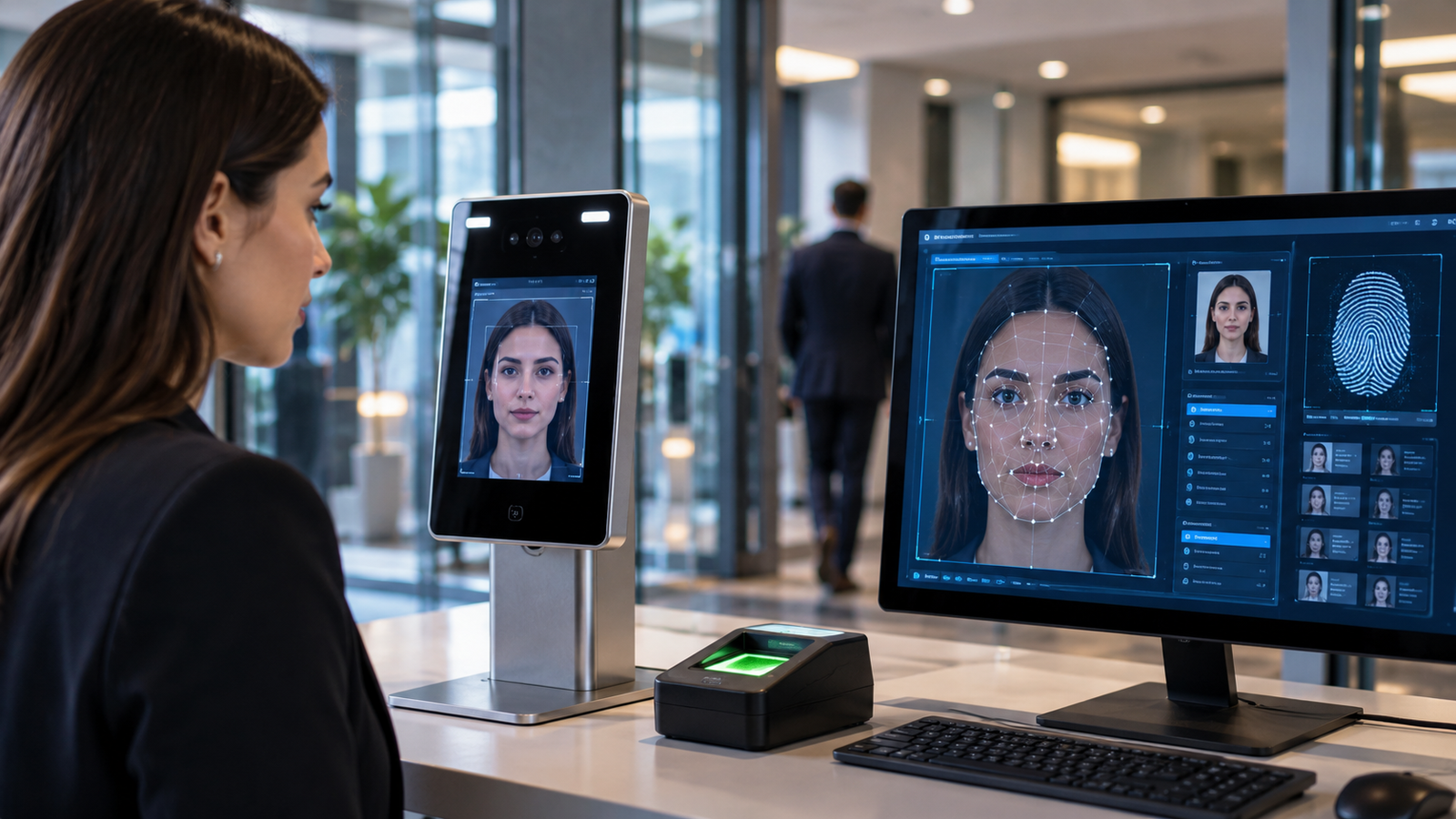
Visionics is changing how businesses design products, protect information, automate processes, and interact with the world. Behind many of these advancements are specialized engineering companies developing tools that make complicated systems easier to build and operate. Visionics is a name associated with several businesses working in electronic design, biometric identification, intelligent sensing, and industrial technology.
What makes Visionics particularly interesting is its connection to different areas of modern engineering. From designing printed circuit boards and developing electronic design software to supporting facial recognition and advanced sensor technologies, organizations using this name have contributed to important technical developments. Their work highlights how hardware, software, and digital intelligence can come together to solve practical challenges.
However, Visionics does not refer to one universal technology platform or a single company operating across every industry. Different organizations use the name for distinct products and services. Understanding these differences is essential when exploring their capabilities, applications, and future potential. This guide examines the technologies associated with Visionics, how they work, and why they matter in an increasingly connected world.
What Is Visionics?
Visionics is a name used by different technology-focused organizations involved in electronics engineering, software development, biometric systems, photonics, and advanced sensing. Although their business activities vary, they share an emphasis on using technical innovation to improve the performance, accuracy, and functionality of electronic or digital systems.
One example is Visionics Limited, which provides services involving printed circuit board design, image processing software, hybrid circuit development, and ASIC and FPGA design. Another is the Visionics group associated with EDWinXP, an electronic design automation platform that supports circuit design, simulation, PCB layout, and manufacturing documentation. These offerings serve engineers who need specialized tools to transform technical ideas into working electronic products.
The name also appears in biometric identification and modern semiconductor sensing. The former Visionics Corporation was known for facial recognition technology before merging with Identix in 2002. Separately, visionICs is associated with single-photon sensing and time-of-flight technology used in advanced depth measurement. Rather than treating these businesses as one organization, it is more accurate to explore their individual contributions to the broader technology landscape.
The History and Evolution of Visionics
The history associated with Visionics stretches across several technology sectors. In electronic design, companies using the name have developed software and engineering services intended to simplify complicated design workflows. These tools emerged as electronics manufacturers increasingly needed integrated platforms for circuit simulation, component placement, and printed circuit board development.
One important historical development involved Visionics Corporation, which specialized in biometric identification. The company emerged from earlier facial recognition technology activities and expanded through its combination with Digital Biometrics in 2001. On June 25, 2002, Visionics Corporation completed a merger with Identix, bringing facial recognition and fingerprint identification capabilities together under the Identix business.
More recently, the visionICs name has appeared in semiconductor sensing. The Chinese company Nanjing VisionICs Microelectronics Technology, associated with the Chinese name 芯视界, focuses on single-photon direct time-of-flight sensing. Company information traces related research activity to Silicon Valley in 2016 and the establishment of its Chinese business in 2018. This is a separate corporate story from the earlier American biometrics company, illustrating how the Visionics name has appeared across different generations of technical innovation.
How Visionics Technology Works
The technologies associated with Visionics operate differently depending on their purpose. Electronic design automation software, for example, helps engineers create digital representations of circuits before manufacturing physical hardware. Designers can place electronic components, establish connections, simulate electrical behavior, and identify potential problems before sending a design into production.
Biometric identification systems operate through another process. They collect measurable physical characteristics, such as facial features or fingerprints, and transform them into digital representations. These representations can be compared against enrolled records to verify someone’s identity or search for a possible match. The historical Visionics FaceIt system was an example of facial recognition software designed for this purpose.
Advanced sensing technology takes a different approach by measuring the physical environment. Direct time-of-flight sensors estimate distance by emitting light and measuring how long reflected light takes to return. Single-photon avalanche diode technology, commonly called SPAD, allows highly sensitive detection of incoming photons. When integrated with suitable processing systems, these sensors can help machines understand distance, depth, and object positioning.
Electronic Design Automation and Visionics Software
Electronic design automation, or EDA, is an important area associated with Visionics. Engineers use EDA platforms to design and test electronic circuits before producing physical prototypes. This reduces the need to perform every experiment on hardware, allowing potential design errors to be detected earlier in development.
EDWinXP is one of the software products associated with the Visionics name. The platform combines schematic capture, circuit simulation, PCB layout, and manufacturing documentation. Its integrated environment allows engineers to work with several stages of electronic development without constantly transferring information between unrelated tools. According to the product documentation, it also supports design information updates between schematic and layout modules.
This type of integration is particularly valuable in complex electronics projects. Consider an engineer developing a custom controller for an industrial machine. The project might involve power regulation, sensors, microcontrollers, and communication interfaces. Using integrated design tools, the engineer can examine circuit behavior, adjust component placement, and prepare manufacturing files through a more organized workflow.
Printed Circuit Board Design and Development
Printed circuit boards, commonly known as PCBs, provide the electrical connections that allow components inside electronic devices to function together. They appear in smartphones, medical devices, computers, automotive electronics, and industrial equipment. Designing a reliable PCB requires careful attention to electrical performance, physical dimensions, thermal behavior, and manufacturing limitations.
Visionics-related electronic design services and software support this development process. PCB design generally begins with a circuit schematic showing how components are connected. Engineers then create a physical layout, placing components on the board and routing conductive tracks between them. The goal is to produce a design that works electrically while remaining practical to manufacture and assemble.
Modern PCB design also involves managing signal integrity, electromagnetic interference, and heat generation. A circuit that performs well in simulation may still encounter problems if traces are positioned incorrectly or sensitive components are exposed to electrical noise. Effective design practices help reduce these risks and improve the reliability of finished electronic products.
Visionics and Biometric Identification Systems
Biometric identification is one of the most historically significant technologies connected with the Visionics name. Biometrics involves recognizing or verifying individuals through measurable human characteristics. Common examples include fingerprints, facial features, iris patterns, and voice characteristics.
Visionics Corporation gained attention for facial recognition technology, particularly its FaceIt system. The software converted facial information into representations that could be compared against stored images or identification records. In the early 2000s, facial recognition attracted increasing interest from governments, airports, and security organizations seeking more efficient identification methods.
However, biometric systems are not automatically accurate in every environment. Image quality, lighting conditions, camera angles, demographic performance differences, and database design can influence results. Early tests of the FaceIt technology also revealed a gap between advertised expectations and performance under certain testing conditions. This historical experience remains relevant because modern biometric systems still require independent evaluation, human oversight, privacy protections, and carefully defined operating procedures.
Facial Recognition Technology and Its Applications
Facial recognition technology allows computer systems to analyze facial information and compare it with previously enrolled data. Although the basic idea sounds straightforward, practical implementation requires several technical steps. These may include face detection, image normalization, feature extraction, template comparison, and decision-making based on confidence thresholds.
In a controlled access system, for example, a camera might capture an employee’s face and compare the extracted features with an authorized identity record. If the system determines that the information meets its verification criteria, it may allow access. Similar identification techniques can be considered for account authentication, identity verification, and security investigations, although each application presents different requirements.
The challenges become more complicated when facial recognition is used in public spaces. Individuals may not know when their images are captured, how long their information is stored, or whether the system is capable of making reliable identifications. Consequently, responsible implementation must address transparency, consent where appropriate, data security, accuracy testing, and applicable legal requirements rather than focusing exclusively on technical convenience.
Visionics and Advanced 3D Sensing Technology
Three-dimensional sensing helps electronic devices understand their surroundings by measuring depth and distance. Traditional cameras primarily record visual information, while depth sensors provide additional spatial measurements. This difference matters for applications where machines need to determine how far away an object is, not simply what it looks like.
The semiconductor company visionICs develops technology associated with single-photon direct time-of-flight sensing. Its product categories include one-dimensional and three-dimensional time-of-flight sensor chips. These components are intended for applications such as consumer electronics, robotics, drones, smart home systems, and automotive sensing.
The basic operating principle involves sending light toward a surface and detecting its reflection. By measuring the time interval between emission and detection, the system estimates distance. More sophisticated systems can combine repeated measurements across multiple locations to construct depth information. Actual performance depends on factors such as sensor architecture, processing algorithms, environmental lighting, reflectivity, and measurement range.
Artificial Intelligence and Intelligent Automation
Artificial intelligence and automation are becoming increasingly important in electronic systems. While not every Visionics-branded product uses AI, several technologies associated with the name can support intelligent systems. Cameras, depth sensors, and digital signal processors provide information that machine-learning applications may use to interpret their environment.
Consider an autonomous mobile robot operating inside a warehouse. The robot must identify obstacles, estimate distances, plan movement, and react to unexpected changes. Depth-sensing hardware provides spatial measurements, while navigation software processes those measurements and decides how the robot should move. This combination helps transform raw sensor information into practical decisions.
AI can also assist with electronics engineering and manufacturing through automated inspection, predictive maintenance, and design analysis. For example, an industrial imaging system may capture photographs of manufactured components, while image-processing software detects visible defects. These are broader industry applications of technologies related to sensing and digital engineering; they should not be interpreted as features offered by every company named Visionics.
Visionics Applications in Different Industries
The technologies associated with Visionics have relevance across many industries, although specific products and services vary by company. Electronics manufacturers use design software to develop circuit boards and electronic assemblies. Engineering consultancies may provide specialized design support for organizations that lack the resources to maintain large internal development teams.
Security and identity management represent another application area. Biometric systems can support controlled access, identity verification, and identification workflows when used appropriately. Historically, Visionics Corporation focused on this market through facial recognition products, while its merger with Identix expanded the combined company’s range of biometric technologies.
Industrial manufacturing, automotive systems, robotics, and consumer electronics also benefit from advanced sensing and imaging. Distance-measurement sensors can support obstacle detection, proximity monitoring, and equipment automation. Industrial imaging systems can contribute to inspection and quality control. These examples demonstrate the broad relevance of Visionics-associated engineering capabilities without suggesting that all such applications originate from the same business.
Visionics in Consumer Electronics and Smart Devices
Consumer electronics increasingly depend on sophisticated sensors, compact circuit designs, and advanced software. Devices that once performed a small number of simple functions now incorporate cameras, wireless communication, motion tracking, and environmental awareness. Developing these features requires cooperation between semiconductor suppliers, circuit designers, software engineers, and manufacturers.
Time-of-flight sensing is particularly relevant to devices that need distance information. Robotic vacuum cleaners, for example, may use depth or proximity measurements to help navigate around objects. Mobile devices can also use depth-sensing technologies for certain camera, interaction, and spatial awareness functions. The visionICs semiconductor business identifies consumer electronics among the markets for its sensing products.
The main engineering challenge is balancing performance with cost, energy consumption, and physical size. A sensor may deliver detailed measurements but consume too much power for a compact battery-operated device. Similarly, advanced processing capabilities may increase production costs. Successful consumer products require careful tradeoffs that allow the finished device to remain useful, affordable, and dependable.
Visionics in Industrial Manufacturing and Quality Control
Industrial manufacturing depends on accuracy, repeatability, and reliable operation. Even small defects can create expensive problems when products are manufactured at scale. As a result, companies increasingly use electronic monitoring, optical inspection, and automated measurement to improve production quality.
Visionics is also the name of an Australian engineering consultancy describing work in photonics, laser-based manufacturing, industrial imaging, and sensing. Its stated capabilities include laser marking, measurement systems, process monitoring, and equipment modernization. These services represent a distinct organization from the historical biometric and electronic design businesses.
Technologies of this type can support several manufacturing activities. Laser-based marking can create identification information on suitable materials, while optical inspection systems can check whether a manufactured surface meets specified requirements. Sensor-based monitoring can identify changes in operating conditions. When implemented carefully, such systems help engineers investigate problems earlier and maintain more consistent production standards.
Benefits of Visionics-Related Technologies
One major benefit of specialized electronic design and sensing technology is improved development efficiency. Integrated design software allows engineers to examine circuit functionality and layout details before manufacturing. Identifying mistakes during development can reduce expensive revisions, shorten troubleshooting cycles, and improve overall project organization.
Another advantage is greater measurement and process visibility. Depth sensors provide information about distance, while imaging systems capture visual details that may be difficult to assess through manual inspection alone. In industrial settings, these capabilities can help equipment respond to changing conditions and give operators more useful information about production performance.
Flexibility is equally important. Organizations rarely have identical technical requirements, so solutions must often be configured for particular environments. A circuit design tool used in education may serve a different purpose from one used in commercial manufacturing. Likewise, a proximity sensor for a household appliance has different performance requirements from a sensor used in industrial automation. Specialized technology is most valuable when its capabilities match a clearly defined problem.
Challenges and Limitations of Visionics Technology
Despite their advantages, advanced electronic technologies introduce technical and operational challenges. Hardware and software systems must be designed to work reliably under real conditions, not merely in laboratory demonstrations. Temperature changes, vibration, electromagnetic interference, poor lighting, and component variation can influence performance.
Cost and integration complexity also deserve attention. A company implementing new sensing hardware may need compatible controllers, processing software, network connections, and trained employees. Electronic design platforms require engineers to understand simulation assumptions, component specifications, and manufacturing rules. Without adequate testing and technical expertise, sophisticated tools may fail to deliver their expected benefits.
Privacy and security become especially important when systems process identifiable personal information. Biometric records require careful handling because people cannot replace their fingerprints or facial characteristics as easily as they can change a password. Organizations deploying identification technologies should evaluate legal obligations, data retention policies, access controls, security risks, and the possibility of inaccurate results.
How Businesses Can Choose the Right Visionics Solution
Choosing a Visionics-related product or service begins with identifying the precise technical requirement. A company developing a printed circuit board needs a different solution from an organization evaluating industrial sensors or biometric identification. Because multiple unrelated businesses use the Visionics name, verifying the supplier’s official identity and product documentation is an essential first step.
Technical evaluation should focus on measurable requirements rather than marketing descriptions. For electronic design software, useful considerations include supported file formats, simulation features, component libraries, operating system compatibility, licensing terms, and documentation quality. For sensors, engineers should examine range, accuracy, power consumption, environmental tolerance, communication interfaces, and integration requirements.
Businesses should also investigate the support available after purchase. Technical documentation, product updates, compatibility information, training, and responsive customer assistance can have a major influence on long-term usability. Before committing to a solution, a small proof-of-concept project or controlled evaluation may reveal whether it performs reliably under the organization’s actual working conditions.
The Role of Visionics in Research and Education
Research and education are important areas for electronic design software. Engineering students need opportunities to translate theoretical concepts into practical circuits and systems. Software that supports schematic design and simulation can help students explore electronic behavior without relying entirely on physical laboratory equipment.
The Visionics group associated with EDWinXP has promoted its software for professional and educational use. Information published by Visionics India also describes academic project assistance, electronics training, and technical support activities. These offerings connect electronic design tools with the practical skills required in engineering environments.
For educational institutions, the usefulness of such tools depends on curriculum alignment and practical accessibility. Students should learn not only how to operate design software but also how to interpret simulation results, understand component limitations, and validate physical prototypes. Combining software experience with hands-on engineering helps build stronger problem-solving skills and prepares learners for more demanding technical projects.
The Future of Visionics and Emerging Technologies
The future of technologies associated with Visionics will likely be influenced by developments in semiconductor design, automation, machine vision, and intelligent sensing. Electronic products continue to incorporate more processing capabilities and specialized sensors, creating opportunities for tools that simplify design and improve system integration.
Three-dimensional perception is a particularly interesting area. Robots, drones, and automated equipment need dependable information about nearby objects and changing surroundings. Improvements in sensor sensitivity, power efficiency, manufacturing processes, and on-device processing could make advanced depth measurement more practical across a wider range of products.
At the same time, future progress will depend on overcoming familiar engineering challenges. New technology must demonstrate reliability, reasonable cost, secure operation, and measurable benefits. Biometric products will also face continuing scrutiny regarding privacy, accuracy, and appropriate use. Organizations associated with the Visionics name may pursue different development priorities, so the future of each business should be evaluated independently rather than treated as one unified technology roadmap.
Why Visionics Matters in the Modern Technology Landscape
The significance of Visionics lies in the technical areas represented by companies using the name. Electronic design, biometric identification, semiconductor sensing, and industrial imaging may appear to be separate disciplines, but they share a common objective: transforming information into useful results.
Electronic design tools help engineers create the hardware that powers modern devices. Sensing systems provide machines with information about the physical world. Identification technologies attempt to connect digital processes with verified human identities. Industrial imaging allows businesses to inspect products and monitor operations with greater consistency. Together, these fields support the development of more capable electronic and automated systems.
Understanding the distinctions between Visionics-branded organizations is just as important as understanding their technologies. The historical facial recognition business, the EDWinXP electronic design group, the UK engineering company, the Australian photonics consultancy, and the visionICs semiconductor developer should not be assumed to share ownership, products, or capabilities. Recognizing these differences makes technical research more accurate and helps businesses identify genuinely relevant solutions.
Conclusion
Visionics represents an interesting collection of technology-related businesses and innovations spanning electronic design, biometric identification, intelligent sensing, and industrial engineering. Although these organizations are not all connected, their work demonstrates the importance of specialized tools in modern technology development. From circuit design software and facial recognition to depth sensors and manufacturing inspection, these technologies help address practical engineering challenges.
As industries continue adopting automation, connected devices, and advanced sensing, the demand for reliable electronic systems will remain important. Understanding what each Visionics organization offers, evaluating its technical capabilities, and recognizing its limitations can help engineers, businesses, and technology enthusiasts make more informed decisions about emerging solutions and their potential applications.